
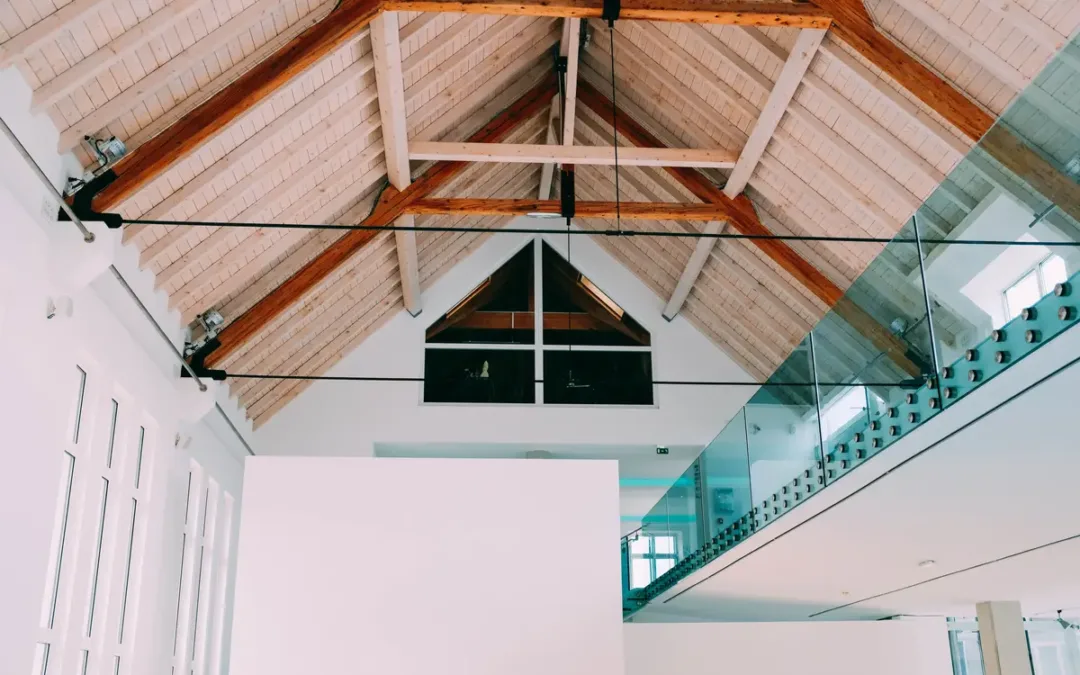
The common project and question we get asked on a number of occasions here at Studio Charrette is ‘Can we get planning approval or lawful development for our loft conversion? The obvious answer is to book in an appraisal with one of our expert consultants before you submit or start any project by emailing [email protected], providing your contact details, the full site address and what it is you are intending to do; even if it is just an idea or concept, we can help provide you with guidance and advice. If you want to know what exactly a planning appraisal consists of, please view our website and podcasts for further details. A loft conversion can make a real difference to your home – here’s how to have one built without making expensive errors.
Obtaining statutory consents and building a loft conversion can be a long and frustrating process. It can be even more frustrating when your application has been refused. That is why it is a good idea to consider all the possible reasons your proposal might have been rejected. If you are wondering what factors could lead to a loft conversion refusal by the local planning authority (LPA) – the authority in charge of processing your application – then this article is for you.
Did you or do you even need planning permission?
In certain cases, your loft conversion may well fall within the tolerances of permitted development legislation. To review what permitted development is and how to apply for something called a Lawful Development Certificate, please review our website and our video content and blogs on permitted development.
In most cases, you only require planning permission if:
- You live in a conservation area or another designated area (e.g., an area of outstanding natural beauty)
- Your property is a listed building
- The building is split up into flats
- Permitted development rights have been removed in your area (the council does this with an Article 4 direction) or for your house in particular
Generally speaking, outside of those situations, loft conversions can be carried out under permitted development. However, even with permitted development, there are certain restrictions to consider, and you need to obtain a lawful development certificate to regularise your loft conversion. Thus, it’s important to understand the difference between projects with permitted development rights and projects without these rights. We’ll elaborate on this below.
For any project that may be considered permitted development, a Lawful Development Certificate is recommended, as it is the only way to get a legal determination from your planning authority. A lawful development certificate proves that your development is compliant (permitted) and would be required should you sell the property at any stage in future. More importantly, it protects you from enforcement and retrospective planning issues, for example, if a neighbour complains and the council determines that planning permission is in fact required. Only your planning authority can decide whether your development is permitted by submitting an application for LDC, which they would either approve or reject. Should you choose to build without first submitting any form of application, there would be a risk of potential enforcement or retrospective planning issues.
The process of applying for a lawful development certificate is the same as a householder planning application. We need to prepare the necessary supporting evidence and architectural drawings, prepare, submit and manage the application, respond to any queries or change requests, etc. The process will take at best 3 months, and if they require additional info, possibly longer. For this reason, the costs are almost the same as full planning permission.
Why use us and what are some of the legislative requirements?
In theory, anyone can submit an application; however, not everyone can get an application approved. Aside from industry professionals, most who try to do it themselves fail to get their applications validated, and those who do manage may be rejected unnecessarily due to missing information or mistakes. This is why we recommend booking an appraisal with us by emailing [email protected].
It is strongly recommended that no work is commenced or contractors booked in until you have all of the necessary approvals; doing so would be at your own risk. In terms of any possible loft conversion and roof alterations, the construction of a loft conversion may be permitted development, but to confirm this, a lawful development certificate application is highly recommended. Any lawful development certificate would need to meet the criteria I outline very briefly below:
- The property must be a single house and not flats.
- No part of the dwellinghouse would, as a result of the works, exceed the height of the highest part of the existing roof
- Any external extensions to the roof (dormers, increased roof height, etc.) must not face towards the public highway – rooflights are accepted provided they are not projecting excessively from the roof slope.
- The cubic content of the resulting roof space must not exceed the cubic content of the original roof space by more than 40 cubic metres
- Must not include any external balconies or verandas.
- Must not include the installation, alteration or replacement of a chimney, flue or soil and vent pipe.
- Any external materials used must be matching materials
- Any side windows should be obscure glazed.
The above is a very brief summary of the requirements. To reiterate, the only way in which you will get a formal legal determination that the work is lawful is to submit a lawful development certificate, which we can submit and process on your behalf. Please contact us here: email [email protected] to book in a planning appraisal with us first before you start any work. We will research your site and advise you of any significant issues or policy constraints.
While lawful development certificate applications are of a similar process to full planning, they typically face less scrutiny provided a planning statement can justify its appropriate nature in line with the General Permitted Development Order. Objections cannot be raised on amenity or design grounds for a lawful development certificate. If you provide us with your project details and a date and time you wish to discuss your proposals. We can book you in with one of our expert consultants for a conversation, and they will guide you through what is required to achieve a successful approval.
Can you give me a simple yes/no answer about whether it is permitted development?
The truth here is that we cannot; we can only advise you if we consider something may fall within the tolerances of permitted development and then recommend the submission of a lawful development certificate. With permitted development, it’s advisable to submit an application for a lawful development certificate (LDC). Because even though this type of project does not technically require planning permission, you may discover, down the line, that your loft conversion does not actually satisfy the limits and conditions pertaining to permitted development. Here’s the scary part: if you were to fail to meet these requirements, the council would be able to serve you an enforcement notice, effectively forcing you to undo the conversion. But with the LDC in hand, your loft conversion is protected against such an enforcement notice. For more detailed guidance and advice on the submission of an LDC, please book in a planning appraisal with one of our expert consultants who will advise you of all the limitations and restrictions and how we can help you submit an LDC. Please review our website and watch and read our previous blogs on LDC’s and permitted development for further details.
Planning is anything but simple, which is why it is always best to engage with a consultant at the earliest opportunity. Whilst we are not the Council, and there are always hurdles and obstacles to overcome, if you have one of our expert consultants to guide you through that process, we can overcome those hurdles and hoops you need to jump through. It’s crucial to start the right way. So much time and money are wasted by people putting in applications that the council is certain to refuse. Sometimes because the council would block anything on that site, but often they turn the proposal down because the application takes the wrong approach. Either way, it’s a refusal that could have been avoided. Speak to us here first by emailing [email protected], and we will do the rest. We will help you save time and money and avoid submitting an application that stands no chance of ever gaining approval. Experience is valuable in a situation like this. As a national consultancy with planners with many years of experience and expertise in local government and private practice, we believe that the experience of everyone who has worked at Studio Charrette has been used to establish and perfect how to improve your chances of ensuring your loft conversion either achieves a Lawful Development Certificate or planning permission.
Book an appraisal with us at Studio Charrette now. Email [email protected] with your full site address and project details, and we can book in a planning appraisal with you. Provide us with all the details of your project, and we will do the rest. We will contact you to book in a suitable time to have a phone or Zoom consultation with one of our expert consultants. They will, prior to your consultation, research your site address, taking into consideration all of the above points and more, so that you can have a detailed and informed discussion about the most suitable type of application to submit and our reasons why. They will advise on the relevant planning policies and constraints applicable to your site so that you don’t end up submitting an application that has no chance of approval whatsoever. Shortly after the call on the same day, you will receive by email our written summary and advice discussed during your consultation. You will also receive a quotation from us explaining what our fees are for the work on that type of application.